

New Colliers report finds AI, energy, and demographics are redefining corporate real estate across APAC
Asia Pacific’s commercial real estate landscape is being reshaped by a convergence of artificial intelligence, energy constraints and demographic shifts, as companies reassess how and where they operate, according to new research from Colliers.
The report, Building Resilience: Five Megatrends Redefining Corporate Real Estate, highlights how these structural forces are influencing corporate location strategies, workplace design and long-term investment decisions across a region expected to drive about 60 per cent of global economic growth in the coming decades.
“Asia Pacific’s dynamism shows there’s no longer a global monopoly on innovation or competition. The region will become an increasingly important factor in location strategies globally.” Mike Davis, Managing Director, Occupier Services Asia Pacific, Colliers

Mike Davis, Managing Director, Occupier Services Asia Pacific, Colliers
1. AI drives new demand for offices and digital infrastructure
Artificial intelligence is emerging as a key driver of change in how organisations structure their operations and plan their real estate.
The report highlights the growing integration of automation, analytics and AI into business functions, which is transforming how companies make decisions and assess their space requirements. Asia Pacific is also positioning itself as a major hub for digital infrastructure investment and expanding technology talent pools, reinforcing its attractiveness for companies seeking to scale AI-enabled operations.
This shift is prompting organisations to rethink workplace strategies, including how offices are designed and how space supports evolving business needs.
“The combination of technological change, demographic shifts and infrastructure pressures is reshaping how our clients make real estate decisions. Organisations that take a proactive approach will be better positioned to navigate disruption and unlock long-term value.” Amit Oberoi, Head of Enterprise Clients Asia, Colliers

Amit Oberoi, Head of Enterprise Clients Asia, Colliers
2. Energy constraints reshape investment priorities
Energy availability is becoming a critical factor in real estate and location decisions, particularly as demand rises from power-intensive technologies.
The report points to increasing pressure on energy systems, driven by growing consumption and infrastructure constraints, with Asia Pacific facing particularly strong demand due to urbanisation and data centre expansion.
“The required capital (for the build out of data centres), both human and financial, is challenging to source. We will have to be creative to execute and the payoff will be long-term. If you’re planning a project, it’s best to start early and have a capable team that can help you address these challenges.” Jatin Shah, Chief Operating Officer, India, Colliers

Jatin Shah, Chief Operating Officer, India, Colliers
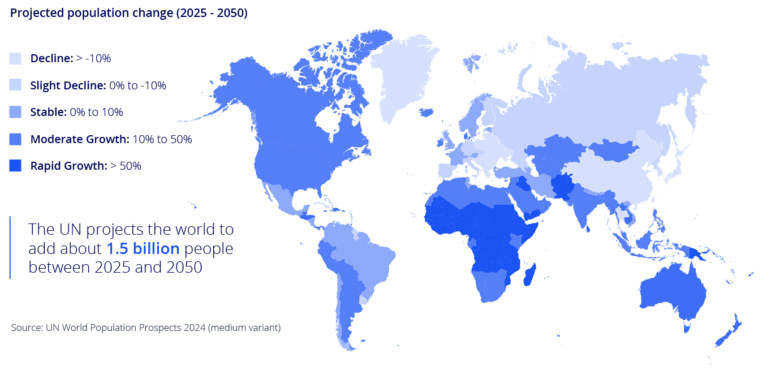
3. Talent and demographics drive regional diversification
Demographic change is also reshaping how companies approach workforce and location strategy across Asia Pacific.
Ageing populations in some markets are coinciding with younger, fast-growing economies, creating new dynamics in how businesses source talent and deploy operations.
This is prompting organisations to look across the region to balance mature markets with emerging talent centres, reinforcing a more distributed approach to real estate and investment.
“Access to top tier human capital has been and will continue to be key to organisation’s success in this rapidly shifting macroeconomic landscape. We are transitioning to a materially lower (population) growth environment in which access to emerging pockets of younger, tech native, lower cost labor pools in Asia and Africa can provide a completive advantage for many organisations.” Mike Davis, Managing Director, Occupier Services Asia Pacific, Colliers
4. Climate risk and regulation factor into long-term pricing
Climate-related risks are increasingly influencing real estate decisions, particularly in markets exposed to extreme weather and environmental change.
The report highlights how more frequent disruptions and evolving regulatory expectations are challenging the long-term viability of certain locations, with many Asia Pacific markets facing heightened exposure.
This is driving a greater focus on resilience and risk management in both asset strategy and location planning.
“Teams must be climate literate and ready for potential disruptions. This means upskilling teams in sustainability and resilience, and weaving climate risk awareness into every function – from facilities to finance.” Gary Cui, Senior Director, Sustainability Service Center, China, Colliers

Gary Cui, Senior Director, Sustainability Service Center, China, Colliers
5. Shifting global trade patterns reshape location strategy
Changes in global trade relationships and supply chains are also contributing to a shift in how companies approach real estate.
As economic growth patterns evolve, businesses are reassessing traditional models and expanding into new markets, with Asia Pacific expected to play an increasingly central role in global trade and investment flows.
“These megatrends will require businesses to fundamentally reassess the ways they plan, invest in and operationalise locations and workplaces.” Richard Garing, Managing Director, Occupier Services, Australia, Colliers

Richard Garing, Managing Director, Occupier Services, Australia, Colliers
Readiness gap creates opportunity
Taken together, the five megatrends point to a more complex operating environment for both investors and occupiers across Asia Pacific. The report also highlights a gap between awareness and preparedness, with many organisations still underprepared for challenges related to energy supply and talent availability.
As Asia Pacific takes a more central role in global growth, the ability to navigate these megatrends is expected to become a defining factor in investment performance.
The pace of change means organisations must act now to strengthen resilience and prepare for the future. Organisations that invest in flexibility, strengthen workforce capabilities and embed resilience into decision-making will be better positioned to navigate disruption and capture long-term opportunities.
Colliers’ integrated approach to real estate strategy, supported by its ‘Resilience Radar’ framework, is designed to assess how well organisations are positioned to respond to these long-term shifts. To find out more, visit Building resilience: 5 megatrends redefining corporate real estate | Colliers
Leave a Reply