
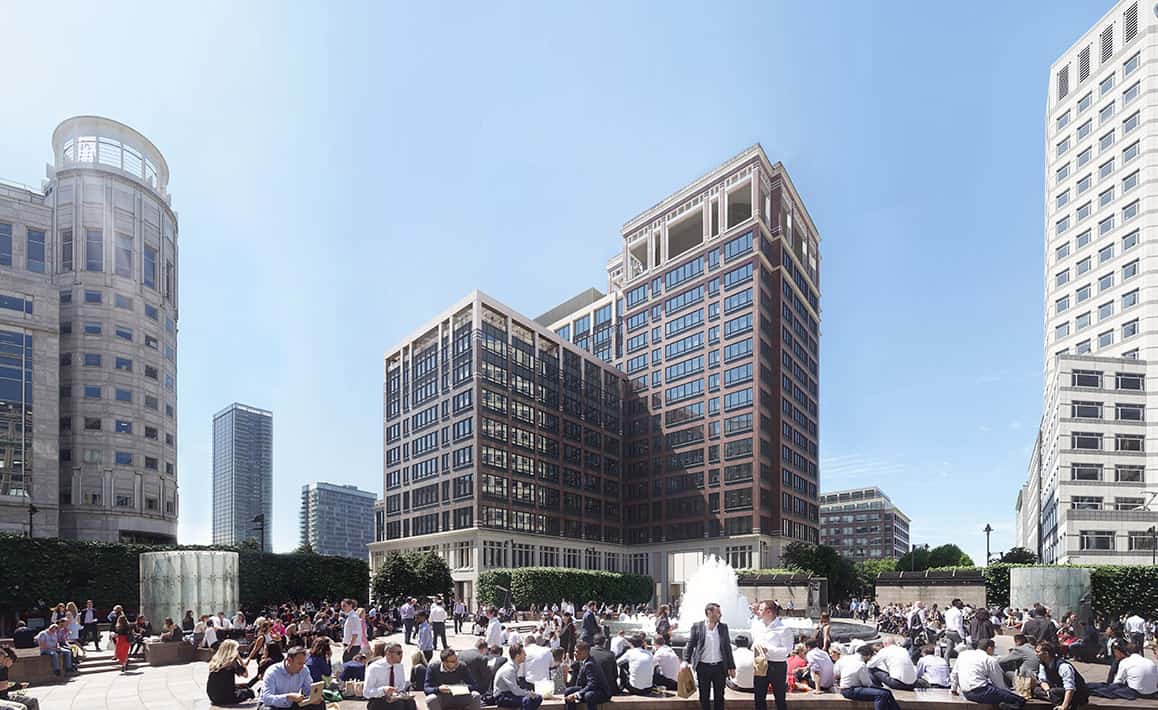
Link has hired brokers to sound out interest in its London office asset (Image: Link REIT)
Hong Kong’s Link REIT reported a 6.9 percent drop in distributions per unit for the year ended 31 March 2026, as persistent rent declines in its home market and mainland China dragged down income for one of Asia’s largest listed real estate trusts.
Link’s net property income fell 3.7 percent to HK$10.2 billion ($1.3 billion) and total revenue declined 2.0 percent to HK$13.9 billion, according to results released by Link Asset Management on Thursday. The declining top line comes as renewed or fresh leases for the trust’s retail properties in Hong Kong, where more than 73 percent of its portfolio is located, were struck at rental rates down 8.2 percent from a year earlier.
With the value of the REIT’s Hong Kong portfolio having fallen 6.2 percent during the period, chief investment officer John Saunders and chief financial officer Ng Kok Siong, who have been guiding Link on an interim basis since the departure of long-term chief executive George Hongchoy at the end of last year, have dropped all mention of the trust’s Link 3.0 strategy, which plotted an overseas expansion to build a regional investment manager.
“Since taking up the leadership of Link on 1 January, Ng Kok Siong and I have refocused the strategy on going back to basics,” said John Saunders, executive director and chief investment officer. “Around 5–10 percent of our overall portfolio is considered non-core and we are undertaking a thoughtful process to divest such assets at an appropriate time.”
Distributions Dip
Lower rents led to Link reducing its distributions per unit to HK$2.54 from HK$2.72 a year earlier, with the total distributable amount dropping 6.4 percent to HK$6.6 billion.
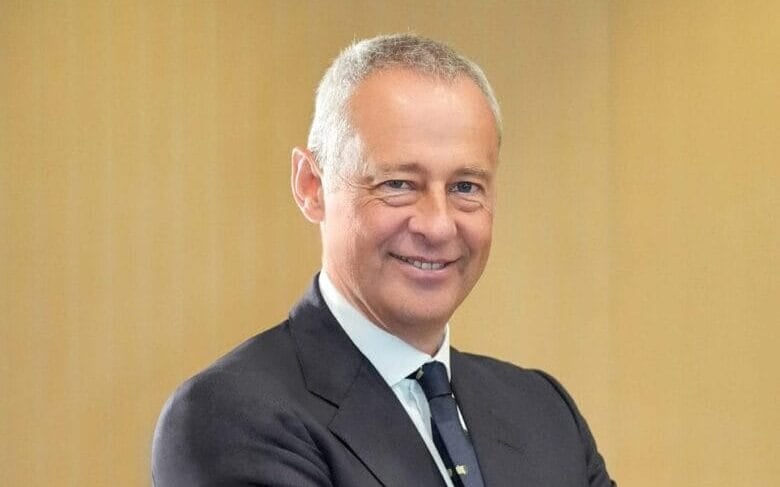
John Saunders, executive director and chief investment officer of Link REIT’s manager (Image: LAML)
The trust’s total portfolio valuation fell 4.1 percent to HK$216.5 billion, with Link’s Hong Kong portfolio accounting for the bulk of the decline as retail property values slid 6.3 percent to HK$110.4 billion. Car park and related business values were down 5.4 percent to HK$43.5 billion, and the trust’s office portfolio in the city decayed 11.0 percent to HK$5.1 billion to create a combined HK$10.5 billion fall in Link’s largest market.
The trust’s anchor tenant at The Quayside office property in Kowloon East, JP Morgan, has confirmed it will not renew its lease upon expiry in late 2028, having signed on as anchor tenant at Sun Hung Kai Properties’ Artist Square Towers in West Kowloon, adding further pressure on the Hong Kong office portfolio.
In mainland China, Link’s second largest market, property values fell to HK$29.7 billion from HK$31.4 billion, with retail rental reversion coming in at negative 14.3 percent. The trust’s Link Square office asset near Xintiandi maintained 95.7 percent occupancy despite rising market vacancy, according to the announcement.
3.0 Where Did You Go
While Greater China’s property crunch has dented Link’s balance sheet in its two largest markets, the trust’s overseas assets have benefited from recovering commercial values and rising rents.
With leasing deals struck during the period averaging 12.3 percent higher rents than a year earlier, and occupancy at 98.2 percent, the value of Link’s Singapore retail assets rose 5.5 percent in local currency terms to HK$15.1 billion.
In Australia, Link achieved 99.5 percent occupancy in its portfolio with leasing deals signed at average rents 16.5 percent higher than a year earlier and valuations climbing 20.5 percent to HK$11.2 billion.
Despite the strong performance, Link has concentrated its divestment efforts on its overseas portfolio, with the trust announcing in April that it had agreed to sell its Swing By @ Thomson Plaza retail property to local investors for S$250 million, with proceeds earmarked for unit buybacks.
Link has also engaged brokers to explore a sale of The Cabot, a 17-storey office block in London’s Canary Wharf that serves as the European headquarters of Morgan Stanley. That marketing effort comes after Canary Wharf Group, the district’s owner, returned to profit in 2025 as its office portfolio rose in value for the first time since the pandemic, according to the Financial Times.
In May 2025, management told analysts that expansion into overseas markets had contributed to earnings resilience in its most recent financial year. The strategy did not appear in Link’s presentation to investors on Thursday.
Rental Challenges
For the year begun on 1 April Link said it expects rent declines in Hong Kong to persist at levels broadly in line with the most recent period.
Around 34.6 percent of the trust’s retail properties in Hong Kong will face lease renewals during the current fiscal year, which at rent cuts broadly in line with this year’s 8.2 percent, implies a potential reduction of roughly HK$135 million in Hong Kong retail base rent. That would be in addition to any shortfalls resulting from double-digit percentage rate cuts in mainland China rents for leases falling due there.
Link reassured investors that it aims to keep earnings stable and protect DPU in the year ahead through cost savings, divestments and an accelerated unit buyback programme. Investors appeared to welcome the new direction, with the trust’s units closing up 0.80 percent on the day of the results announcement.
The trust’s overseas divestment efforts continue, with The Australian reporting earlier this month that Link is in talks to sell its 100 Market Street office property in Sydney for more than A$500 million ($358 million).
Market sources have also told Mingtiandi that Link has sounded out buyer interest in its set of interests in a portfolio of three Sydney retail assets acquired from GIC in 2021.
Leave a Reply