
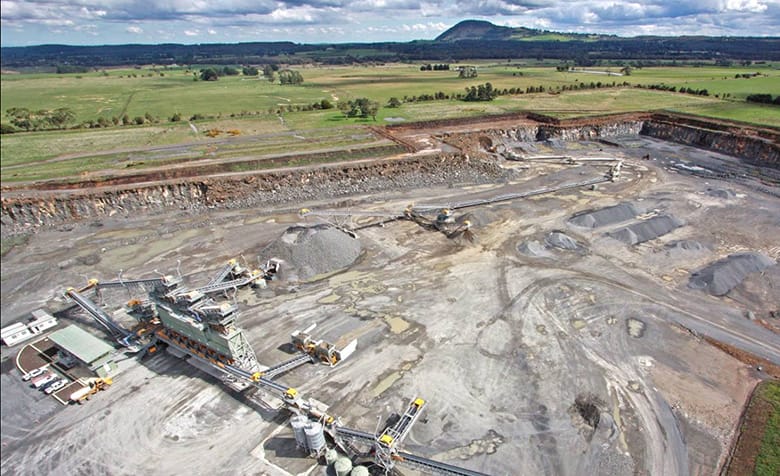
Boral’s Ravenhall cement plant as seen in 2015 (Image: Boral)
Australia’s Dexus plans to invest more than A$10 billion ($7.2 billion) developing a warehouse complex in western Melbourne in what the company described in an announcement on Tuesday as the largest logistics project ever in the country.
In a 50:50 joint venture with cement market Boral, which owns the 630 hectare (1,557 acre) site in Melbourne’s Ravenhall suburb, Dexus says the project has the potential to yield up to 2.5 million square metres (27 million square feet) of lettable space.
“Opportunities of this scale are rare, with the potential to secure a generation of industrial growth in one of Australia’s most important logistics corridors,” Dexus CEO Ross Du Vernet said.
The plans are subject to a rezoning application which has already been submitted, with the partners aiming to develop the project in stages in accordance with market conditions, Du Vernet said.
Capital Partnership Plans
The joint venture is in line with Dexus’ strategy of building a diversified, capital-efficient platform, Du Vernet said in the statement, with the company planning to bring in other capital partners as the project is developed. Dexus said it intends to maintain a minimum of 10 percent stake in the project as developer and manager.

Dexus managing director and CEO Ross Du Vernet (Image: Dexus Group)
Boral currently uses the land for cement and other materials production, while the facilities are nearing the end of their useful life. The site is about 25 kilometres by expressway from the Port of Melbourne and sits next to Dexus’ 90-percent-complete, A$1.5 billion Horizon 3023 industrial park, which is home to tenants including Amazon and Nike.
The area is part of western Melbourne’s main industrial zone and is close to the Western Intermodal Freight Terminal, a proposed interstate rail freight hub and warehousing precinct.
Boral CEO Matt McKenzie said: “This joint venture is a significant milestone for Boral and a compelling demonstration of the long-term value embedded in our landholdings.
“Ravenhall is one of the most strategically important industrial sites in Australia,” Boral CEO Matt McKenzie said in a statement. “This partnership with Dexus allows Boral to unlock that value in a disciplined, capital-efficient way — contributing land rather than cash.”
Tightening Supply
Vacancy in the west Melbourne industrial and logistics sector is around 4.5 percent, compared with 4 percent on average for the whole city, as warehouse space availability tightens across Australia’s second-largest population centre, Cushman & Wakefield said in a recent report.
Cushman & Wakefield expects Melbourne’s vacancy in the industrial and logistics market to fall to 2 percent by 2028, the lowest among Australia’s three largest cities. Speculative new supply is forecast to keep falling through to 2028, when less than 300,000 square metres of space is expected nationally, supporting rental growth of 4 percent per year, according to Cushman & Wakefield.
“There is scope for a higher rental growth outlook than the market may be assuming, providing upside through re-letting and lease expiries,” Cushman & Wakefield said.
Ranked among the 10 largest real estate fund managers in Asia Pacific in a recent survey by Willis Towers Watson, Dexus said in an operational update on Tuesday that its industrial portfolio occupancy had held steady at 96.9 percent in the first quarter of 2026.
“The industrial sector continued to normalise through the March quarter, with demand holding up and rent growth moderating after the strong gains of recent years. Sydney and Melbourne vacancy remain low by historical and global standards,” Dexus said in the update.
The fund manager has deferred projects as the Reserve Bank of Australia has responded to the Gulf War and other price pressures by raising rates this year. It put plans for an A$1.1 billion office tower in central Melbourne on the back burner last month, the second major project Dexus has shelved in recent months.
Leave a Reply