
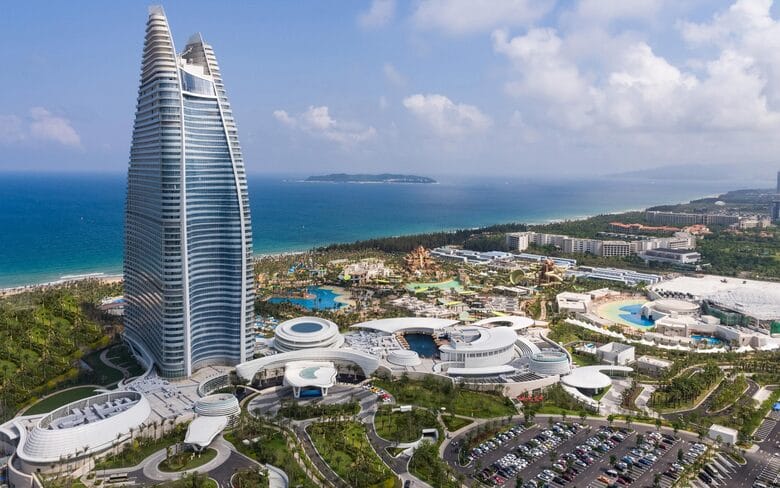
The 1,314-room Atlantis Sanya opened in 2018 (Image: Fosun Tourism Group)
Fosun International has applied to spin off its Atlantis Sanya resort into a Shanghai-listed trust, marking one of the most high-profile attempts yet to securitise a trophy hospitality asset through China’s nascent REIT regime.
The Hong Kong-listed conglomerate said in a Thursday filing that it had submitted application materials to the China Securities Regulatory Commission and the Shanghai Stock Exchange for the listing of units backed by the 1,314-key resort in China’s southernmost province of Hainan.
Atlantis Sanya, located in Haitang Bay and owned through Fosun Tourism Group, will serve as the underlying asset for the closed-end REIT, according to the announcement. China has yet to see a publicly listed hotel REIT, with regulators only opening the sector to commercial property assets including hospitality late last year.
“The proposed spin-off is conditional upon, among other things, the approval by the CSRC and the SSE of the proposed listing,” said Fosun, led by chairman Guo Guangchang. “The company will make further announcements in relation to the proposed spin-off as and when appropriate in accordance with the requirements of the listing rules.”
Tourism Cornerstone
An initial public offering for a hotel-backed REIT would let Fosun recycle capital from one of its flagship tourism assets while tapping onshore liquidity, as developers and owners increasingly turn to China’s REIT market to monetise stabilised properties.
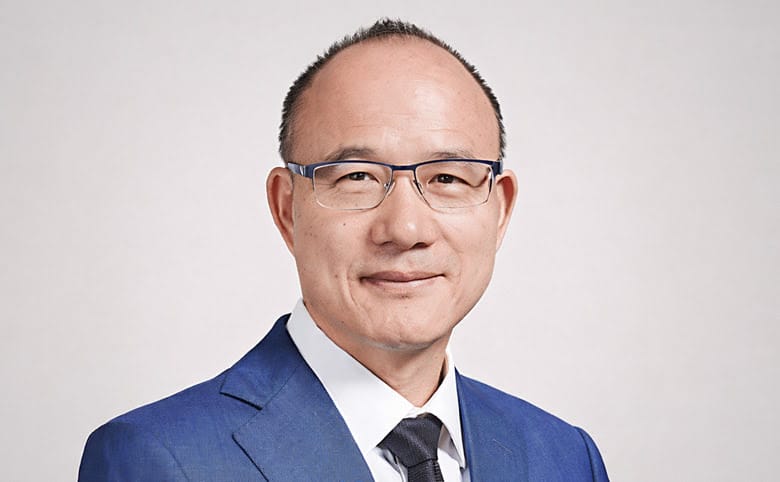
Fosun International chairman and executive director Guo Guangchang (Image: Fosun International)
Atlantis Sanya anchors Fosun’s push into tourism and leisure, with the group having committed RMB 10 billion ($1.5 billion) to develop the integrated resort. The project opened in 2018 as China’s first Atlantis-branded property under a partnership with South African operator Kerzner, featuring a hotel, water park and aquarium.
At launch, Fosun positioned the resort as a cornerstone of its effort to build a global tourism platform, complementing its ownership of Club Med and other travel-related businesses.
After stalling during China’s COVID lockdowns, operating business volume at Atlantis Sanya jumped 90.9 percent in 2023 from a year earlier to RMB 1.7 billion, before easing to RMB 1.5 billion in 2024, according to financial disclosures. Volume in the first half of 2025 reached RMB 760 million, with an average occupancy rate of 88.4 percent based on 3.1 million visits.
Steadying the Ship
Fosun’s push to monetise Atlantis Sanya comes as the group works to stabilise its balance sheet after a volatile earnings period. The Shanghai-based conglomerate reported revenue of RMB 192.1 billion for 2024 while posting a net loss of RMB 4.4 billion, driven largely by one-off impairments and asset write-downs, even as its underlying operations remained in the black.
The group returned to profitability in the first half of 2025, reporting net income of RMB 661 million, but has since warned of a wider full-year loss amid ongoing non-cash charges.
Fosun continues to explore additional capital markets options for its tourism portfolio, including a potential Hong Kong IPO of its Club Med unit, according to a Bloomberg report this week.
The French-founded operator, which Fosun acquired in 2015, runs roughly 70 upscale resorts globally and represents a core asset within the Chinese group’s tourism portfolio. While Hong Kong is currently the preferred listing destination, alternative venues like Paris and Amsterdam are also under consideration, the news agency said.
In 2024, Singapore’s CapitaLand Investment was in talks to buy a 20 to 30 percent stake in Club Med, people familiar with the discussions told Bloomberg at the time. That same year, Fosun divested a three-hotel ski resort in Japan’s Hokkaido for at least $236 million.
Last March the conglomerate privatised Fosun Tourism Group in a deal valuing the business at HK$9.7 billion ($1.3 billion).
Leave a Reply