
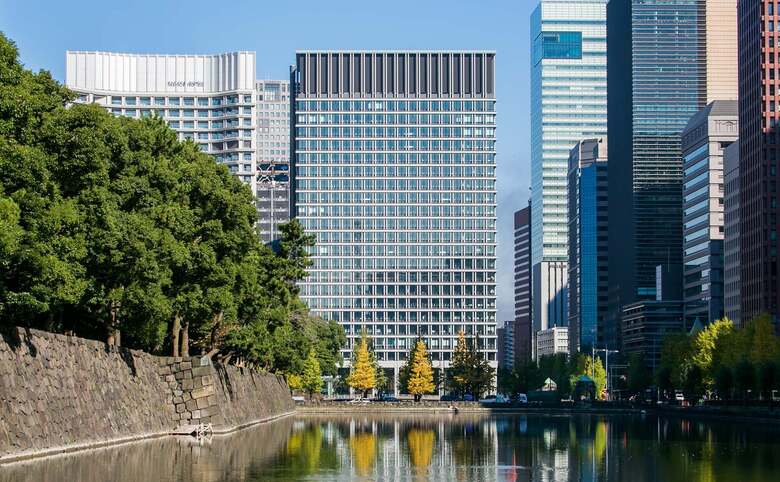
The insurer’s portfolio includes Nippon Life Marunouchi Garden Tower (Image: US Green Building Council)
Blackstone has won a JPY 1.5 trillion ($9.4 billion) commitment from Nippon Life Insurance Co, with the US fund manager set to help deploy the insurer’s capital into credit strategies while advising on efforts to boost the value of one of Japan’s largest privately held office portfolios.
The memorandum of understanding announced Wednesday calls for Nippon Life to allocate the capital to Blackstone-managed private credit and structured credit strategies over the next five years, while also tapping the Manhattan-based firm’s real estate expertise to optimise about a dozen of the insurer’s properties, including large-scale urban assets.
The agreement was unveiled one day after Blackstone announced the $13.1 billion final closing of its third Asia private equity fund, as the NYSE-listed group led by chairman and CEO Stephen Schwarzman continues to expand its capital base in Japan and across Asia Pacific despite a tougher fundraising climate.
“As the world’s largest alternative asset manager with leading platforms in private credit and real estate, we will bring the full breadth of our capabilities to help advance Nippon Life group’s long-term objectives,” said Jonathan Gray, president and chief operating officer of Blackstone.
Tokyo Towers
Nippon Life owns about 200 office buildings in major cities across Japan, according to the insurer’s property leasing portal, giving Blackstone a rare advisory role over a nationwide portfolio anchored by large-scale assets in Tokyo, Osaka and other business centres.
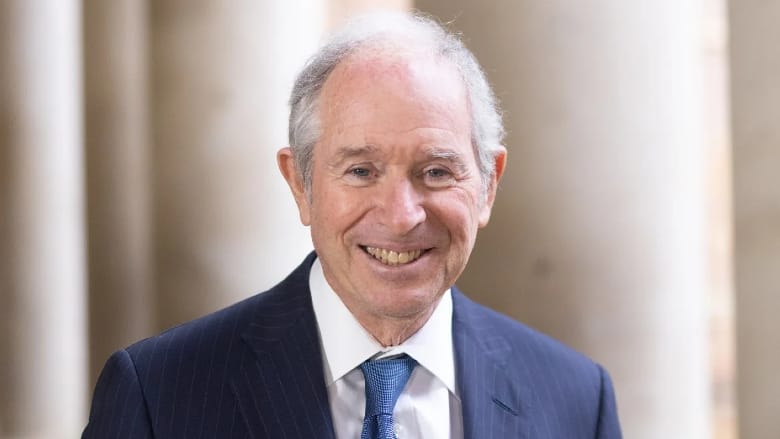
Blackstone co-founder, chairman and CEO Stephen Schwarzman
The group’s investment and rental properties had a non-consolidated book value of JPY 1.28 trillion and fair value of JPY 1.89 trillion as of March 2025, with those assets including rental office buildings and commercial facilities, according to Nippon Life’s latest financial statements.
Among the insurer’s flagship Tokyo holdings is the Nippon Life Marunouchi Building in Chiyoda ward, a 2004-vintage tower standing 28 storeys above ground with four basement levels, 95,346 square metres (1 million square feet) of gross floor area and a standard floorplate of 2,177 square metres.
Nearby, the Nippon Life Marunouchi Garden Tower provides 56,120 square metres of gross floor area across 22 above-ground floors and three basement levels, with the 2014-vintage building directly connected to Otemachi station and offering a standard floorplate of 1,689 square metres.
In Minato ward, Akasaka Green Cross was completed in May 2024 as a 28-storey tower with three basement levels, 73,453 square metres of gross floor area and a 1,834 square metre standard floorplate, with direct access to Tameike-sanno and Kokkai-gijidomae stations.
Nippon Life Hamamatsucho Crea Tower, also in Minato, spans 99,251 square metres of gross floor area across 29 above-ground floors and three basement levels, with the 2018-vintage property connected to Daimon station and a two-minute walk from Hamamatsucho station.
The insurer added to its central Tokyo office exposure last year by acquiring a stake in Otemachi One Tower from Mitsui Fudosan for $287 million, in one of Japan’s biggest single-asset office trades of 2025.
Deepening Ties
Blackstone’s real estate role in the Nippon Life partnership follows its purchase of the Tokyo Garden Terrace Kioicho commercial complex from Seibu Holdings in early 2025 for $2.6 billion, in what the firm described as the largest real estate acquisition by a foreign investor in Japan.
The $1.3 trillion fund manager told Nikkei Asia in March that it plans to invest $15 billion in Japan’s property market over a three-year period, targeting properties including data centres, logistics facilities and hotels.
Nippon Life has entrusted management of its general accounts to Blackstone since 2005, and the US firm also manages private credit for Resolution Life, the Bermuda-based insurer acquired by Nippon Life in 2025, according to Nikkei Asia.
“We view this comprehensive strategic partnership with Blackstone as a critically important initiative to significantly advance our group’s asset management strategy,” said Satoshi Asahi, representative director and president of Nippon Life. “Building on the strong relationship of trust we have cultivated over the long-term, our organisation is positioned to benefit from the support of Blackstone’s investment capabilities and expertise.”
Fundraising Push
The latest credit mandate comes after Blackstone during the first quarter closed its fifth flagship opportunistic credit fund at its $10 billion hard cap, surpassing the predecessor vehicle by $1.25 billion and marking the largest fundraise in the strategy’s nearly two-decade history.
Blackstone booked $68.5 billion in inflows during the first quarter, down only slightly from the previous quarter, as fundraising across credit, insurance, private equity and infrastructure lifted trailing 12-month inflows to $246.3 billion.
The firm’s fundraising momentum has been uneven across strategies, with Blackstone Real Estate Partners Asia III standing at $8.2 billion in committed capital at the end of the first quarter, unchanged from the previous quarter and still short of the 2022-vintage vehicle’s $9 billion target.
The closing of Blackstone Capital Partners Asia III at $13.1 billion gave the firm its largest-ever Asia private equity vehicle, exceeding the fund’s $10 billion target and $12.9 billion hard cap while more than doubling the capital raised for its predecessor on a stand-alone basis.
Blackstone’s private equity strategies have also been active in digital infrastructure, with the firm leading a $1.2 billion funding round for Indian AI data centre startup Neysa and teaming with Canada’s CPPIB on the $16.1 billion acquisition of Australian data centre giant AirTrunk.
For Nippon Life, the Blackstone partnership gives Japan’s largest private asset owner a route to higher-yielding credit exposure while bringing external asset-management expertise to a domestic office portfolio whose size, age profile and central-city concentration make it a natural target for value enhancement.
Leave a Reply