
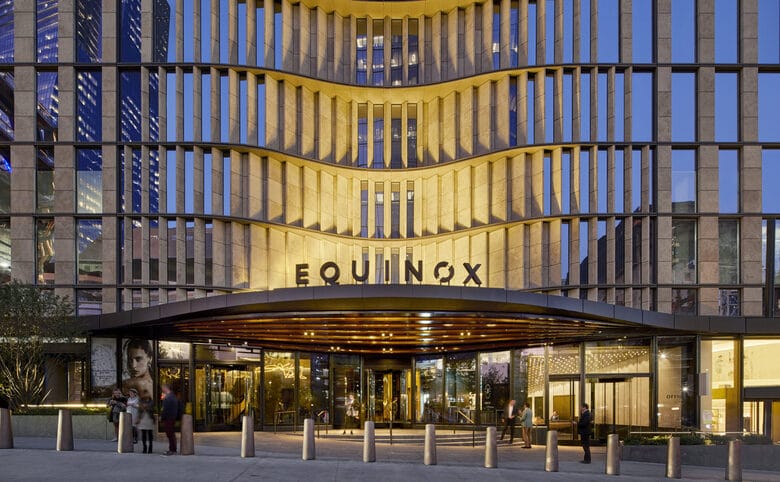
The tower contains an Equinox health spa and hotel, as well as the brand’s head office (Image: Mori Trust)
Mori Trust has acquired the hotel, office and retail portion of a skyscraper in New York City’s Hudson Yards megaproject for $541 million, marking the Japanese developer’s second real estate investment in Manhattan.
Privately held Mori Trust purchased the first to 38th floors of 35 Hudson Yards from a joint venture of Related Companies and Oxford Properties on Monday, the Tokyo-based firm said Tuesday in a release. Floors 53 to 92, containing luxury condos, were excluded from the deal.
The acquired asset comprises 490,128 square feet (45,534 square metres) of the 1 million square foot building’s floor area, including a 60,000 square foot Equinox health spa, 180,000 square feet of fully leased office space (including the corporate headquarters of Related-owned Equinox) and 237,453 square feet for the 212-key Equinox Hotel occupying the 24th to 38th floors.
“Acquiring high-quality properties overseas, such as 35 Hudson Yards, contributes to the stability and sustainability of our asset portfolio and will drive further growth in the future,” said Mori Trust president and CEO Miwako Date. “Going forward, we will operate 35 Hudson Yards, an iconic building representing Manhattan, as an even more attractive property.”
$1.5B NYC Portfolio
The latest buy follows Mori Trust’s 2023 acquisition of a 49.9 percent stake in a Midtown Manhattan office building, 245 Park Avenue, from joint owner SL Green Realty in a deal valuing the 45-storey tower at $2 billion. The transaction price of $541 million for 35 Hudson Yards was provided to US website Bisnow by a Mori Trust spokesperson.
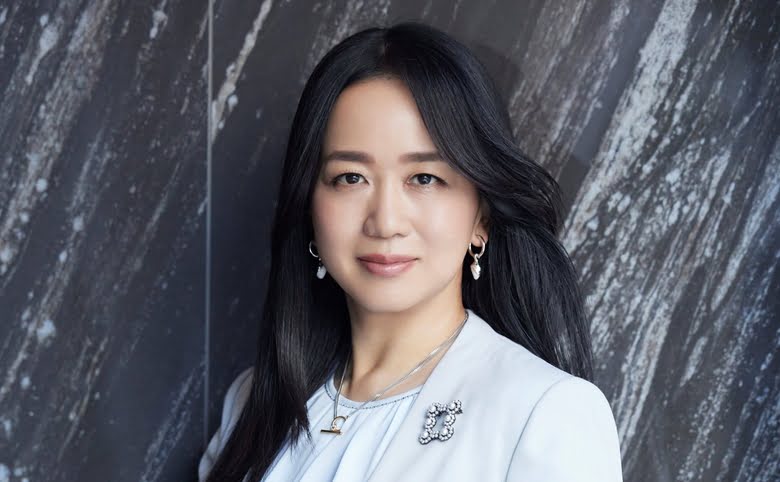
Mori Trust president and CEO Miwako Date
The acquisition of 35 Hudson Yards is aligned with Mori Trust’s Mid to Long Term Vision Advance 2030, a roadmap under which the firm has set targets to achieve operating revenue of JPY 330 billion by 2030 through JPY 1.2 trillion ($7.7 billion) in investments by that fiscal year.
The Hudson Yards property is Mori Trust’s 12th real estate investment in the US, where the group’s portfolio includes three office buildings in Boston and two in the Washington DC area. In Japan, the firm has developed mixed-use complexes including the Tokyo Shiodome Building and last year picked up the 300-key Fairfield by Marriott Osaka Namba from private equity shop PAG for an undisclosed sum.
Mori Trust is one of the two major builders descended from the Tokyo-centred real estate empire of Date’s grandfather, Taikichiro Mori. Mori Building, controlled by another branch of the family and famed for megaprojects like Tokyo’s Roppongi Hills complex and the Shanghai World Financial Center, in 2023 opened Japan’s tallest office tower at the Azabudai Hills project in the capital’s Minato ward.
Mori Building made its own careful step into Manhattan’s office market last year by acquiring an 11 percent stake in the $4.7 billion One Vanderbilt skyscraper from SL Green, which has its headquarters in the 73-storey tower.
Leading the Recovery
Local heavyweight Related and Canada’s Oxford completed 35 Hudson Yards in 2019 as part of their $25 billion transformation of the area on Manhattan’s far West Side. The 28 acre (11 hectare) megaproject includes eight buildings with offices, residences, retail spaces and a single hotel, the Equinox at 35 Hudson Yards.
Manhattan continued to lead the US office recovery in the third quarter, with tenants on the island taking up 4.4 million square feet more than they gave back during the period, according to Colliers. The showing boosted net absorption in Manhattan to 11.6 million square feet in the year to date, with Dallas a distant second at just under 3 million square feet.
Manhattan’s asking rents for central business district offices also topped the table at $82.11 per square foot per month, edging Miami ($79.72) and San Francisco ($75.53). Office vacancy in Manhattan stood at 9.9 percent, the lowest rate among the 10 largest US markets, compared with 24.7 percent in Boston, 26 percent in Los Angeles and 31.5 percent in San Francisco.
Leave a Reply