
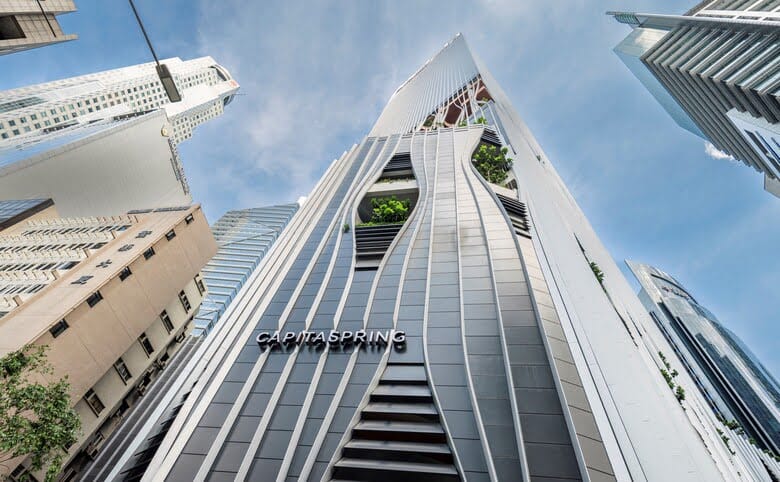
CICT took full ownership of CapitaSpring’s commercial component last year (Image: CICT)
CapitaLand Integrated Commercial Trust’s net property income rose to S$609.9 million ($479 million) in the second half of 2025, a 6.8 percent increase from a year earlier, thanks in part to its acquisition of the commercial component of Singapore’s CapitaSpring tower in August.
Adjusting for that acquisition, as well as for the trust’s divestment of the 21 Collyer Quay office tower in the fourth quarter of 2024, the REIT’s net property income grew 3.3 percent year-on-year on a like-for-like basis, according to a statement to the Singapore exchange by the trust’s manager, a unit of SGX-listed CapitaLand Investment.
CICT’s distributable income grew 16.4 percent year-on-year to S$449.0 million in the July-December period with income from its part ownership of ION Orchard also enhancing returns after the trust acquired a 50 percent stake in the mall in October 2024.
“Our FY 2025 results reflect the strength of our portfolio and the disciplined execution of our reconstitution strategy, which have lifted the quality and earnings resilience of CICT,” said
, executive director and CEO of the manager of CICT, the largest real estate investment trust listed on the Singapore exchange.
Reconstitution Pays Off
For the full year of 2025, CICT’s net property income rose 3.1 percent year-on-year while distributable income rose 14.4 percent, with CICT’s Singapore assets, which account for 94 percent of the portfolio’s property value, outperforming those in Australia and Germany.
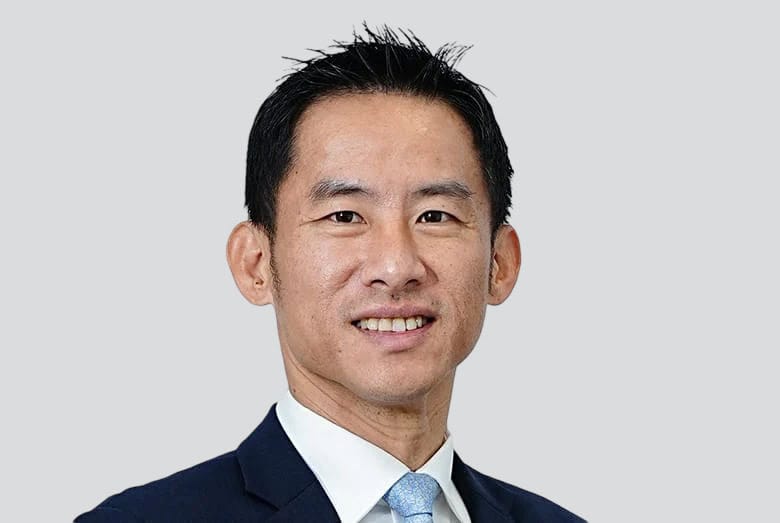
Tan Choon Siang, chief executive of CICT’s manager (Image: CapitaLand Investment)
The trust’s manager attributed its strong performance to active asset and portfolio management strategies. As of the end of 2025, the average occupancy of CICT’s retail portfolio was 98.7 percent while its set of mixed-used complexes were 97.7 percent occupied.
Office was the only segment that saw a decline in occupancy in the fourth quarter, slipping to 95.7 percent – down 0.5 percentage point from the preceding three months and dragging CICT portfolio’s overall occupancy down 0.3 percentage point to 96.6 percent.
Despite the slide in occupancy, net property income from the trust’s office portfolio rose 11.8 percent in the second half of 2025 from the same period a year earlier to reach S$213.2 million – the highest among all segments.
Driving that growth was income from the commercial component of the CapitaSpring complex in Singapore’s central business district, as well as rental reversions of 6.6 percent.
The trust manager last May divested the serviced residence component of the 51-storey tower before acquiring the remaining 55 percent interest in the building’s commercial component three months later.
NPI for CICT’s retail portfolio grew 5.5 percent year-on-year to S$220.2 million in the second half, benefiting from rental reversions of 6.6 percent. The trust’s portfolio of mixed-use projects saw 2.8 percent year-on-year growth in NPI to S$176.4 million.
Firm Growth Outlook
CICT’s manager remains upbeat as it expects its recent positive rental reversions, as well as contributions from asset enhancement initiatives, acquisitions and new developments will drive growth this year and beyond.
“Against a dynamic macroeconomic backdrop, we remain steadfast in elevating asset performance, pursuing growth opportunities, and upholding strong financial discipline,” said Tan.
Tan added that CICT’s S$428 million disposal of Bukit Panjang Plaza last month enables capital redeployment into potential growth opportunities and its winning of the commercial component of the Hougang Central site will expand the REIT’s retail footprint into the northeast region. With approximately 300,000 square feet (27,871 square metres) of net lettable area, the project is expected to generate an entry yield of over 5 percent, he said.
CICT’s portfolio comprises 21 properties in Singapore, two in Frankfurt, Germany, and three in Sydney, Australia, with a total property value of S$27.4 billion as at the end of 2025.
Leave a Reply