
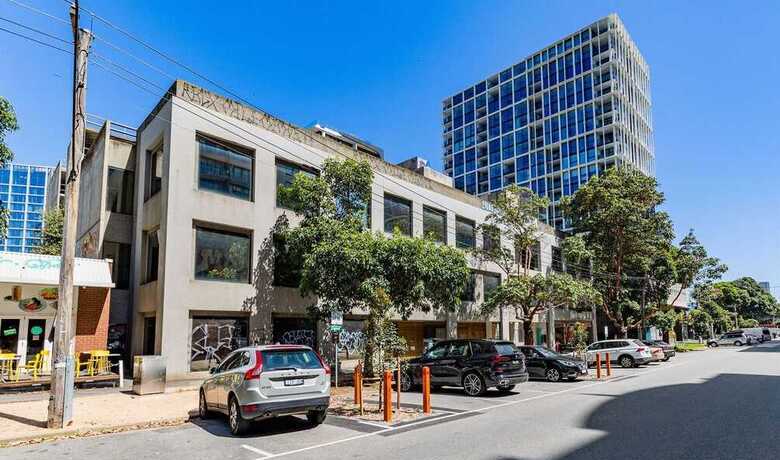
Local acquired 15-37 Bank Street in South Melbourne earlier this month (Image: CBRE)
Melbourne-based build-to-rent operator Local:Residential took its portfolio of rental homes to over 4,000 units earlier this month with a co-founder of the Macquarie Asset Management-backed operator pointing to the scale of its holdings, and the rapid development of Australia’s multi-family market, as bringing more investors into the sector at the same time that is opens up new strategies for fund managers.
The latest addition to Local’s pipeline is a 355-apartment project which the company acquired in South Melbourne and expects to complete later this year. Local announced the deal on 1 February, after having acquired management rights to a 1,252-unit apartment complex on Queensland’s Gold Coast in August. With these two additions to its portfolio in recent months, co-CEO Dan McLennan sees the company hitting growth goals set when he co-founded the company with co-CEO Matt Berg five years ago.
“So we started the business in 2021 and said we wanted to have a 4,000-plus portfolio in five years, and every year we’ve added at least one or two assets,” McLennan told Mingtiandi. “We’re now over 2,150 apartments that are actually operational, another 1,000 under construction and another 1,200 or so that we’re going to kick off in the next 15 months.”
McLennan sees those projects being well-received by consumers who are showing a growing preference for build-to-rent living, and, with more developments leased up, expects opportunities for investors to get-involved in ventures seeded with stabilised assets.
BTR Catches On With Tenants
Despite 2025 project openings such as Greystar’s 617-unit development in South Yarra and Investa’s 434-key Indi Southbank contributing to what some analysts have described as a record level of BTR supply in Melbourne last year, vacancy in the city slid to 2.0 percent at the end of December from 2.2 percent 12 months earlier, according to data from SQM Research.
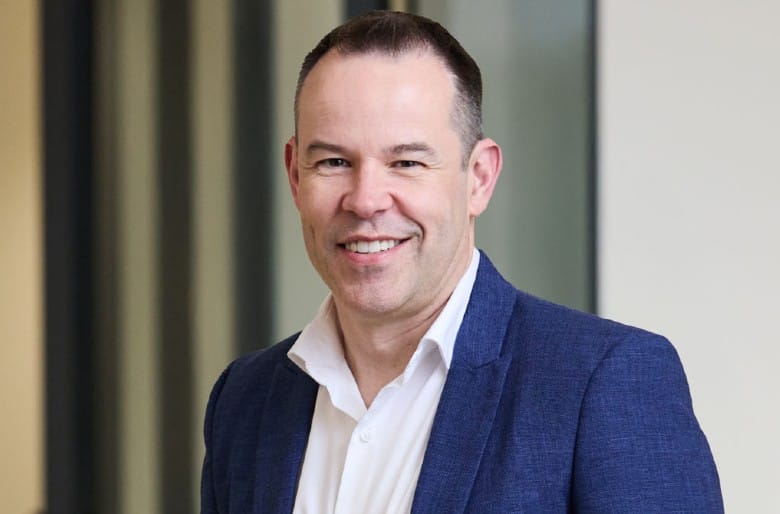
Dan McLennan, Founder and Co-CEO, Local: Residential
The market’s rapid take-up of new projects is linked to growing demand for managed properties, per Local’s experience. With the company having opened the doors to its 425-unit project in Melbourne’s Box Hill suburb last month, McLennan and his team are finding that residents have developed a preference for BTR projects, with many potential tenants looking for opportunities to move into developments opening in the Victorian capital.
“A big source of customers for us are people who are only searching for build-to-rent rather than people who are necessarily looking for rentals,” McLennan said. “The projects – not just ours, but across the board – have been really well-received, well-absorbed.”
McLennan attributes this demand to a value proposition which provides tenants with security of tenure, better maintained buildings with security systems, and amenities such as gyms, co-working space and dining areas.
Customers are leasing up these projects despite rents in BTR communities averaging a 15 percent to 20 percent premium over the private market, by Local’s estimate.
Proof of Concept
With tenants filling up BTR projects, more operators have sold stabilised projects, helping to clarify property values in a sector which previously had been judged by estimates and expectations of future pricing.
Sydney-based Mirvac announced in December that Australian Retirement Trust had agreed to buy a 48.5 percent in its A$1.7 billion ($1.1 billion) Liv Mirvac Fund from Japan’s Mitsubishi Estate, marking the superannuation fund’s first commitment to a BTR portfolio.
In the third quarter of last year Aware Super, another superannuation heavyweight, bought the Brunswick & Co BTR complex in Brisbane from Singapore’s Frasers Property for a reported A$300 million. The sale of that complex in Queensland’s Fortitude Valley took place at an estimated 4.5 percent investment yield with analysts estimating ART’s purchase of its stake in Mirvac’s Liv Fund at a similar cap rate.
“We’re at a stage now where we’ve seen most of the Australian funds are now starting to participate in the (BTR) sector,” McLennan said. “Over the next five or so years, we think that trend will only grow and that there’ll be considerable demand for scale, for portfolios and for assets.”
The living sector veteran sees the growing list of BTR asset disposals creating a track record of exits which align with the company’s earlier expectations and provide assurance to investors which may have remained cautious about a fast-developing sector.
“They (the asset sales) are providing really strong, transparent examples to the market in terms of the positioning of yields,” McLennan said. “It’s playing out as one would expect in terms of what we see in overseas markets and where yields for build-to-rent assets are sitting relative to PBSA (purpose-built student accommodation). That was really the original kind of valuation thesis before we had comparable transactions to compare to, and now we’ve had comparable transactions.”
M&A Market Emerges
Including Australian Retirement Trust’s investment in Mirvac’s Liv fund, there were more than A$9 billion in M&A deals in Australia’s living sector last year, with the mainstream BTR segment accounting for more than A$1.1 billion of that total, per Mingtiandi’s tally.
As the growing universe of asset sales helps define market values, and with tenants taking up new projects, McLennan’s team sees openings for investors targeting core or core-plus opportunities to get involved in Australia’s BTR sector, with Local exploring opportunities for ventures targeting that space.
While Local has yet to commit to a fund or joint venture which could be seeded with some of the now stabilised assets from its development vehicles, the company is confident in investor demand for portfolios of fully leased BTR properties.
“What we’re seeing increasingly is around investors having targeted strategies, looking at whether it’s development or the core and core plus space. So we’re interested to engage with the market and really craft an opportunity using that core to core plus space,” McLennan said.
The same forces that are helping to fill BTR projects and pull more investors into Australia’s living sector are also opening up opportunities for Local to expand its portfolio through acquisitions, such as its purchase of the nearly completed South Melbourne development, which it acquired from a vehicle managed by Hines. That was the third project which Local had acquired from the US developer and fund manager after having inked a deal in 2024 to acquire a pair of Brisbane developments from the Houston-based firm.
We can see within the market some really interesting opportunities to potentially recapitalize some assets that are out there presently in the marketplace operated by third parties and look to bring our management expertise to those buildings,” McLennan said. He added that, “We’re through a proof of concept phase now, but there’s still a period of time, we think, where there’s really good value to be attained before the sector, you know, matures and institutionalizes further.”
Leave a Reply