

Yi Gang’s team at the PBOC have been directing credit away from the real estate sector. Image: Wikimedia Commons
China’s government reduced growth in real estate loans in to 20 percent in 2018 compared to the previous year, as regulators attempt to stave off a potential property bubble by cracking down on illicit lending and vowing to push funding from property into agriculture, small businesses and other priority areas.
Outstanding property loans climbed to RMB 38.7 trillion ($5.72 trillion) by the end of December with the 20 percent growth rate representing an incremental decrease from the 20.9 percent expansion in 2017, according to a quarterly report issued by the People’s Bank of China’s (PBOC).
The tapering lending growth follows statements by public officials in which they have committed to promote a “stable and healthy” real estate market, and emphasized that citizens should refrain from making speculative investments in homes.
Stricter regulations, and zealous enforcement have slowed the country’s dynamic property sector, but previous economic cycles have raised questions regarding regulators’ resolve to keep a lid on the real estate industry, should the broader economy suffer.
Developers Fuel Up While Homebuyers Flounder
Developers were the largest winners in 2018’s more cautious lending environment, with loans to builders expanding 22.6 percent in 2018 to RMB 10.19 trillion, 0.9 percentage points more than in 2017. Loans to affordable housing projects were among the fastest growing market segments, with lending to such projects increasing 29.5 percent year on year to RMB 4.32 trillion, in line with the government’s policy of broadening access to housing.
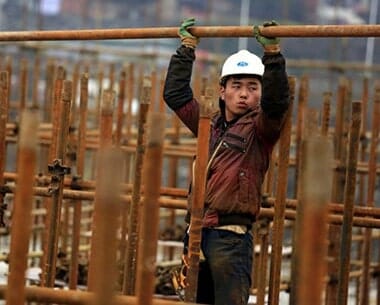
Loans for construction and real estate development grew 20% in 2018
According to the central bank’s data, outstanding mortgage loans grew just 17.8 percent in 2018 to RMB 25.75 trillion, down from 22.2 percent growth in 2017, following a raise in the minimum down payments for mortgages in many Chinese cities, and stricter enforcement of existing regulations.
RMB-denominated loans across industries grew 13.5 percent to RMB 136.3 trillion, up from 12.7 percent last year. While the growth rate of real estate loans declined, medium and long term industrial lending as well as loans in the inclusive financial sector accelerated, according to PBOC statistics
According to China’s National Bureau of Statistics (NBS), real estate investment increased 9.5 percent for the whole year, 0.2 percentage points less than the growth rate over the first 11 months, and only 2.5 percent higher than the expansion recorded in 2017.
The growth was largely fueled by the residential sector, which grew 13.4 percent, and was weighed down by slower investment in offices and commercial buildings, which contracted 11.3, and 9.4 percent respectively, according to the NBS.
Cracking Down on Speculation
Governments in a number of Chinese cities have attempted to curb speculation by placing restrictions on purchases and increasing minimum down payments for mortgages, according to Xinhua.
In July of last year, local governments in 30 Chinese cities stepped up efforts to crack down on illegal real estate transactions after prices for new homes rose in 61 of China’s 70 largest cities in June, according to a monthly survey by the NBS.
Illicit financing has been a main target of these policies. ICBC, the Agricultural Bank of China, CITIC Bank and nine other large financial institutions were placed under intense scrutiny after China’s National Audit Office accused them of breaking rules on lending to the property industry.
In Shanghai, the local branch of the Ministry of Housing and Urban-Rural Development (MOHURD) banned companies with less than five years of operation from buying homes in the city, eliminating a popular loophole that allowed buyers to make otherwise restricted purchases in the city.
Shifting Gears
China’s ongoing focus on real estate speculation reflects a broader move to reduce the risk of a real estate bubble by promoting other sectors, such as infrastructure.
In a statement cited by CNBC, Ting Lu, Nomura’s Chief China economist, noted that an increase in approval of infrastructure projects shows Beijing’s keen interest in investing in urban rail projects to support economic growth.
Traditionally undercapitalized segments like small businesses and agriculture have also been targeted by the government as alternatives to real estate. Among the moves seen as this shift was the PBOC’s 0.5 percent reduction in bank reserve requirement ratios (RRR) at the beginning of this month. The RRR reduction specifically targetted banks that channel more than five percent of their total outstanding or new loan portfolios to small businesses, agriculture, and student loans. An additional one percent cut will be handed out to banks where these loans account for more than 10 percent of total lending, according to state owned news outlet Xinhua.
Leave a Reply