
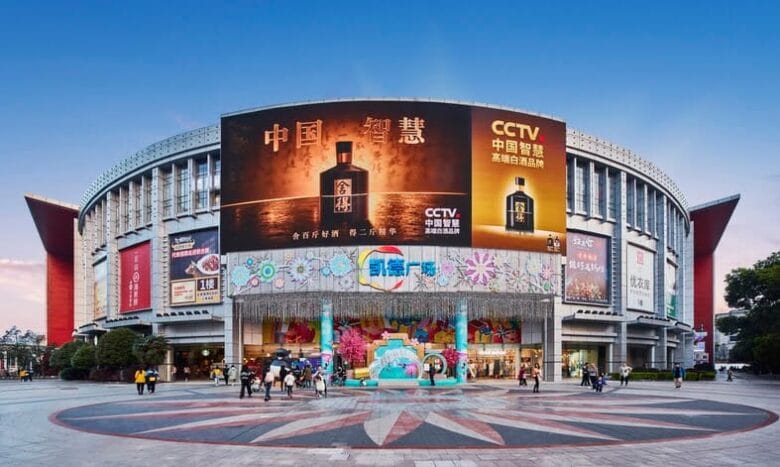
CLCT sold CapitaMall Yuhuating to CapitaLand Commercial C-REIT last year (Image: CapitaLand)
Singapore-listed CapitaLand China Trust’s net property income declined to RMB 1.1 billion ($159 million) in 2025, a 9.4 percent decline from a year earlier, primarily due to weaker performance from its shopping malls and business parks.
The trust’s performance worsened in the second half, with NPI dropping 10.8 percent year-on-year and gross revenue sliding 12 percent, according to a statement to the Singapore exchange on Thursday.
The manager attributed the weaker performance in part to lower revenues after the CapitaLand Investment-sponsored trust sold a mall in Changsha to Shanghai-listed CapitaLand Commercial C-REIT and asset enhancement initiatives at four other shopping centres, as well as lower occupancy and rents at other properties.
Gerry Chan, chief executive of the REIT’s manager, held out hope for improved performance as it works to boost property yields. “We continue to elevate the quality of our retail assets with targeted AEIs and customer-centric offerings to drive long-term income growth, as well as using proactive leasing strategies to maintain high occupancies for our business and logistics parks.”
Retail Challenges
CapitaLand China Trust’s gross revenue was down 9.1 percent in renminbi terms from 2024 to RMB 1.67 billion, CLCT’s manager said.

Gerry Chan of Capitaland China Trust (Image: CapitaLand)
Gross revenue from CLCT’s retail properties, which constitute the largest portion of its portfolio, declined 9.6 percent year-on-year to RMB 1.19 billion in 2025 after the trust ceased to receive revenue from CapitaMall Yuhuating in Changsha since the second quarter of the year. Adjusting for that divestment, gross retail portfolio revenue declined 4.9 percent year-on-year on a same-store basis.
CLCT’s replacement of a cluster of beauty brands at its Rock Square mall in Guangzhou with a large Decathlon store and supermarket upgrades at three other malls also caused temporary disruptions in cashflow.
Overall retail occupancy dropped from 98.3 percent as of December 2024 to 97.2 percent at the end of 2025. CapitaMall Xinnan in Chengdu, with 88.4 percent occupancy in December, was the trust’s worst performing asset, with a 3.6 percentage point increase in vacancy from a year earlier.
Retail rental reversions, calculated based on average rent of new leases compared with that of preceding leases, was negative 2.4 percent for 2025, with rent cuts for automobile sector tenants bringing down average leasing rates.
Discounts for Occupancy
CLCT’s business park revenue dropped 9.3 percent in 2025 to RMB 431.2 million, as the trust’s manager discounted rents to retain tenants, while its logistics park revenue rose about 5 percent to RMB 51.2 million.
Logistics park rental reversions were negative 24.5 percent, mainly driven by rent cuts for anchor tenant JD.com at Wuhan Yangluo Logistics Park to secure an early lease renewal in late 2024. Overall occupancy improved from 97.6 percent in December 2024 to 98.1 percent at the end of 2025.
Business park rental reversion was negative 8.1 percent while occupancy dropped from 87.6 percent in December 2024 to 86.7 percent at the end of 2025.
14.7% Drop in DPU
CLCT reported distribution per unit (DPU) of 4.82 Singapore cents (3.79 US cents) for 2025, down 14.7 percent from 2024.
As of the end of December, CLCT’s portfolio of eight malls, five business parks and four logistics parks in 11 mainland cities was valued at RMB 23 billion, down 0.8 percent year-on-year. The REIT said the valuation slide was mainly due to pressure on occupancy and rents for smaller retail assets, and near-term supply-demand imbalances for business and logistics parks.
Chan added that CLCT will actively seek new investments and capital recycling opportunities.
“With the successful divestment of CapitaMall Yuhuating and the establishment of our C-REIT platform, we will actively source for new investments to reconstitute our portfolio, even as we evaluate further capital recycling opportunities,” said Chan.
CLCT units fell 1.27 percent and closed at 78 Singapore cents on Thursday.
Leave a Reply