
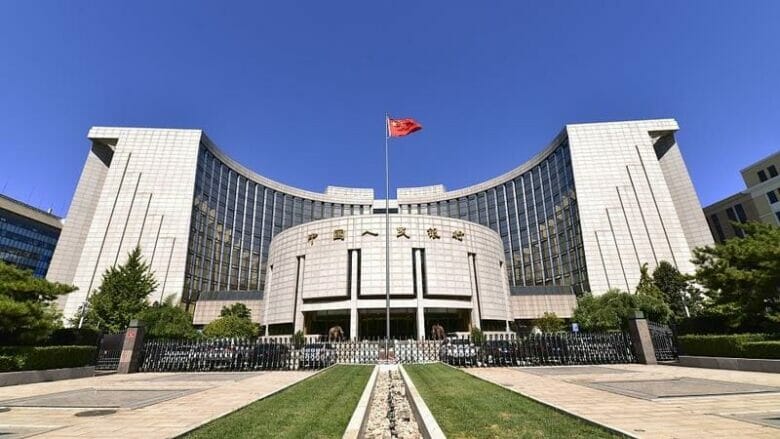
The People’s Bank of China wants to help investors buy more shops and offices
Chinese financial regulators announced on Saturday that they will cut the minimum down payment percentage for commercial property mortgages from the current 50 percent down to 30 percent in their latest move to shore up the sector.
The move aims to adapt to the shifting supply-demand dynamics of the property market and support a new development model for the real estate sector, the People’s Bank of China and the National Financial Regulatory Administration said in a joint statement.
Relevant to financing for shops, offices, serviced apartments, mixed-use developments and hotels, as well as for properties for combined commercial and residential use, the policy is seen having the biggest impact among private investors.
“Lowering the minimum down payment from 50 percent to 30 percent materially reduces the initial capital hurdle and should help unlock some marginal demand, especially for strata offices, shops, and mixed-use commercial units,” James MacDonald, head of Savills research for China, told Mingtiandi.
Financing Not the Only Barrier
Local branches of the central bank and financial regulatory bodies will set city-specific down payment requirements based on the national minimum, per the government statement.

People’s Bank of China governor Pan Gongsheng
While making property more accessible for private investors, the policy shift is not expected to have less relevance for bigger buyers concerned about liquidity and other market factors.
“For institutional investors, the policy is less directly relevant, as financing constraints have not been the main barrier; fundamentals and exit visibility remain the key considerations,” MacDonald said. “I would view this more as a confidence- and liquidity-support measure rather than a decisive turning point for the sector,” said MacDonald.
More Tenants Needed
With banks remaining wary of lending to the real estate sector, the impact of the policy may offer scant support to an industry where agency data shows even top office markets like Shanghai saw rents fall by 10 percent last year in the face of a glut of new office supply.
“While the policy improves financing access on paper, the more important question is how banks implement it in practice,” MacDonald said. “In the current environment — with high vacancy rates, falling rents, and weak income visibility — lenders are likely to remain cautious, focusing more on asset quality, location, and cash flow sustainability rather than simply extending credit on easier terms.”
“As a result, the impact is likely to be uneven. Better-located or more flexible assets may see improved transaction activity, while weaker projects may see limited benefit,” he said.
The policy change is likely to have the biggest impact in cities where local leaders are taking other steps to boost the economy, according to Cushman & Wakefield.
“From a market perspective, the policy is likely to support price stabilisation and transaction volumes in selected cities, especially where oversupply pressures are easing and local governments are actively promoting consumption, services and urban renewal,” Shaun Brodie, head of research content for Greater China at the consultancy told Mingtiandi.
“The inclusion of properties with dual business and living purposes is notable, as it aligns with evolving demand for flexible-use assets and supports the repositioning of older stock. City-level discretion over implementation will also allow the measure to be calibrated to local supply-demand dynamics, reducing the risk of indiscriminate leverage expansion,” he added.
Leave a Reply