
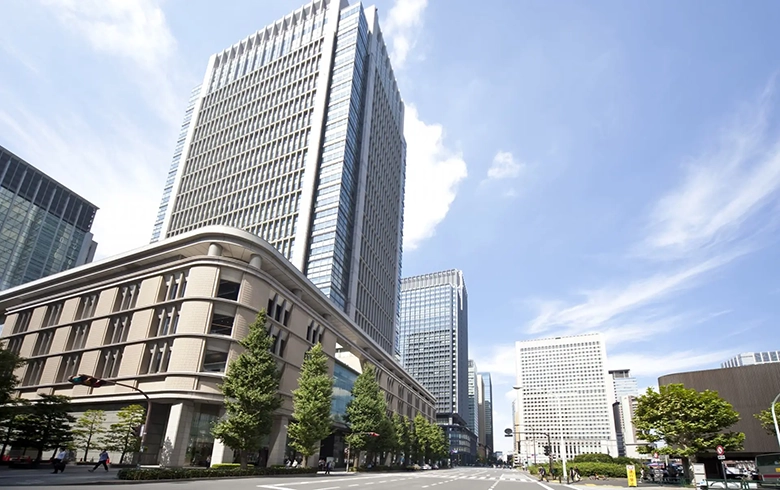
Warburg Pincus has set up shop in the Marunouchi Building opposite Tokyo Station
Mergers and acquisitions in Japan reached a record $232 billion in the first half of 2025, accounting for more than a third of deal activity across Asia, according to figures from London Stock Exchange Group, leading the world’s largest investors to ramp up their presence in the region’s second largest economy.
Long active in Japan through portfolio companies such as ESR, Princeton Digital Group and life sciences platform Vita Partners, Warburg Pincus is adding to the wave of activity in the country, with the US private equity major last week officially opening its office in Tokyo following a recent string of investments.
“As we continue to advance our ambitions in Asia, Japan plays a critical role in our global growth strategy,” said Warburg Pincus chief executive officer Jeffrey Perlman as he presided over an event marking the office opening alongside Japan country head and co-head of Asia real estate Takashi Murata.
“The country’s economic resilience, policy stability, corporate governance reforms, and culture of innovation have created an environment where global growth investors like us can truly add value,” Perlman added. “The opening of our Tokyo office is a statement of intent. We are here to invest, to partner, and to grow — together with Japan, for the long-term.”
Corporate Transformations
Perlman was speaking at the event in the company’s new space in the Marunouchi Building, a landmark commercial complex opposite Tokyo station, one day after Murata appeared in an interview at the Mingtiandi Tokyo Forum, where he pointed to opportunities for Warburg Pincus to enhance the value of Japanese corporations through more effective management.

Warburg Pincus chief executive Jeffrey Perlman presided over the office opening (Image: Warburg Pincus)
“There are about 4,000 public companies in Japan with nearly 40 percent of them still trading at one times book,” Murata said in the interview. He added that, “Given that some of these companies with cash and non-core assets are still trading relatively cheaply when you think about their core businesses, the recapping of public companies allows allocating capital more efficiently.”
With Warburg Pincus implementing its platform-driven real estate strategies in concert with its broader corporate private equity funds, Murata pointed out that Japan’s current wave of corporate restructurings, which frequently involve spinning off real estate businesses and property assets from conglomerates, plays to the company’s core strengths.
Expanding Platforms
The office opening marks the latest step in Warburg Pincus’ growing involvement in the Japan market, as it increases its direct investments in the country’s ‘new economy’ real estate sectors such as logistics, living, and life sciences.

Tak Murata of Warburg Pincus at the Mingtiandi Tokyo Forum
In April the private equity firm announced that it had acquired the Tokyo Beta portfolio, a set of “share house” residential properties spanning more than 16,000 rooms and offering co-living opportunities to residents new to the Japanese capital.
In his interview with Mingtiandi last week, Murata pointed to opportunities to boost returns from that investment, noting, ““We saw a lot of opportunity to streamline the operation, digitize the operation, and possibly create a platform out of it.”
In addition to the Tokyo Beta investment, Warburg Pincus in April also acquired a Tokyo office building through a life sciences joint venture with local player Eastgate Asset Management. In a statement at the time, the partners said they plan to convert the tower in Tokyo’s Shinagawa ward into lab space to address a shortage of life science and R&D facilities.
As one of the most active global investors in Asia’s logistics sector, Warburg in August acquired a pair of warehouses in the Greater Tokyo area for approximately $240 million, per a company statement.
Leave a Reply